Thinking about leaving your job? It’s a pivotal moment, and beyond the excitement of new opportunities lies a critical financial decision: what to do with your 401(k). “Leaving Your Job? How to Smartly Convert Your 401k to a Roth IRA” delves into this important topic, offering a comprehensive guide to navigating the complexities of rolling over your retirement savings.
This guide explains the key differences between traditional 401(k)s and Roth IRAs, the step-by-step process of a rollover, and the tax implications involved. We’ll explore crucial considerations like tax consequences, choosing the right financial institution, and investment strategies. Get ready to gain valuable insights to make informed decisions about your financial future.
Leaving Your Job? How to Smartly Convert Your 401(k) to a Roth IRA
Changing jobs is a significant life event, and it often brings a lot of financial decisions to the forefront. One of the most important is what to do with your 401(k) plan from your previous employer. A common option is to roll it over into a Roth IRA, which can offer significant tax advantages in retirement. However, it’s crucial to understand the nuances of this process to make the best choice for your financial future.
This article will break down everything you need to know about converting your 401(k) to a Roth IRA, from the basics to the nitty-gritty details.
Before diving into the conversion process, it’s essential to understand the fundamental differences between a traditional 401(k) and a Roth IRA, especially as they relate to a job transition. This knowledge will help you make an informed decision about your retirement savings.
What are the fundamental differences between a traditional 401(k) and a Roth IRA account when considering a job transition?
The core difference between a traditional 401(k) and a Roth IRA lies in their tax treatment. Understanding these tax implications is crucial when deciding whether to convert your 401(k) to a Roth IRA. Let’s break down the key aspects of each account type, focusing on contributions, growth, and withdrawals.
With a traditional 401(k), contributions are made with pre-tax dollars. This means the money you contribute reduces your taxable income in the year you make the contribution. For example, if you contribute $10,000 to your 401(k) and your taxable income is $60,000, your taxable income for that year is reduced to $50,000. The money then grows tax-deferred, meaning you don’t pay any taxes on the investment gains as they accumulate within the account.
However, when you withdraw the money in retirement, both the contributions and the earnings are taxed as ordinary income. This can be a significant drawback if you expect to be in a higher tax bracket in retirement.
In contrast, a Roth IRA uses after-tax dollars for contributions. You don’t get a tax deduction for your contributions in the year you make them. However, the growth within the Roth IRA is tax-free, and qualified withdrawals in retirement are also tax-free. This can be a major advantage, especially if you anticipate being in a higher tax bracket in retirement than you are currently.
The primary advantage of a Roth IRA is that you won’t owe any taxes on the money you withdraw in retirement, including the earnings. This can be a huge benefit, especially if your investments grow significantly over time. However, there are income limitations for contributing to a Roth IRA, which we will discuss later.
Here’s a table summarizing the key features:
| Feature | Traditional 401(k) | Roth IRA |
|---|---|---|
| Contribution Limits (2024) | Employee: $23,000; Over 50: $30,500 | $7,000; Over 50: $8,000 |
| Tax Treatment | Contributions pre-tax, growth tax-deferred, withdrawals taxed | Contributions after-tax, growth tax-free, qualified withdrawals tax-free |
| Eligibility Requirements | Offered by employers | Income limits apply for contributions; Must have earned income |
The pros and cons of each account type are important to consider, especially when you’re leaving your job. For a traditional 401(k), the main advantage is the immediate tax deduction on contributions, which can reduce your taxable income. However, the disadvantage is that you’ll pay taxes on withdrawals in retirement. For a Roth IRA, the main advantage is tax-free withdrawals in retirement.
The main disadvantage is that you don’t get an immediate tax deduction for your contributions. When leaving a job, you have the opportunity to roll over your 401(k) into an IRA. This provides an opportunity to convert your traditional 401(k) to a Roth IRA, which can be advantageous if you anticipate being in a higher tax bracket in retirement. The ability to control your investments and choose your own financial institution is another advantage of rolling over to an IRA.
How does the process of rolling over a 401(k) into a Roth IRA work, step by step, for someone changing jobs?
Rolling over your 401(k) into a Roth IRA is a straightforward process, but it requires careful attention to detail. This section provides a step-by-step guide to help you navigate the process smoothly when you are changing jobs. From contacting your current 401(k) provider to opening a Roth IRA account and completing the rollover, this guide will cover all the essential steps.
The first step is to contact your current 401(k) provider. You will need to obtain the necessary paperwork to initiate the rollover. The provider will likely have forms you need to complete, including a rollover request form. Be sure to understand the specific procedures of your plan, as they can vary. Next, you’ll need to open a Roth IRA account with a financial institution.
This could be a brokerage firm, a bank, or an online investment platform. Research and compare different institutions to find one that meets your needs. Consider factors like fees, investment options, and customer service.
Once you have opened your Roth IRA account, you will need to complete the rollover request. You’ll typically provide your Roth IRA account information to your 401(k) provider. The provider will then transfer the funds directly to your Roth IRA account. This is known as a direct rollover and is the preferred method, as it avoids any potential tax implications or penalties.
You’ll need to specify whether you want a direct rollover or an indirect rollover (where you receive a check, and you have 60 days to deposit it into a Roth IRA). Remember, indirect rollovers have tax implications if not completed within the 60-day window.
The final step is to verify that the rollover is complete. Once the funds have been transferred, confirm with both your 401(k) provider and your Roth IRA provider that the rollover has been successfully completed. You should receive statements from both institutions confirming the transaction. Keep these records for your files. Be sure to review your Roth IRA account statement to ensure the funds have been correctly deposited and that your investment choices align with your financial goals.
Here’s a list of documents and information you’ll typically need for the rollover process:
- Your current 401(k) account statements.
- Your Social Security number.
- Contact information for your 401(k) provider.
- Contact information for the financial institution where you will open your Roth IRA.
- Any forms or instructions provided by your 401(k) provider.
Checklist for a Smooth Rollover:
- [ ] Contact your 401(k) provider and request the necessary forms.
- [ ] Open a Roth IRA account with a financial institution.
- [ ] Complete the rollover request form, providing your Roth IRA account information.
- [ ] Choose a direct rollover to avoid tax implications.
- [ ] Verify the rollover is complete by checking your account statements.
- [ ] Keep all records for your files.
- Important Deadlines: Be aware of any deadlines set by your 401(k) provider or financial institution. Complete the rollover process as quickly as possible.
- Key Considerations: Make sure your Roth IRA account is set up correctly and that your investment choices align with your financial goals. Consider seeking advice from a financial advisor if needed.
What are the tax consequences of converting a traditional 401(k) to a Roth IRA, and how can they be managed?
Converting a traditional 401(k) to a Roth IRA triggers a taxable event. Understanding the tax implications is crucial to managing your conversion effectively. This section will discuss the tax consequences of the conversion, how the converted amount is treated as ordinary income, and how to manage the tax liability.
When you convert a traditional 401(k) to a Roth IRA, the entire amount you convert is treated as ordinary income in the year of the conversion. This means that the converted amount is added to your taxable income for that year, potentially pushing you into a higher tax bracket. For example, if you convert $50,000 from your 401(k) to a Roth IRA and your taxable income is $70,000, your taxable income for that year will increase to $120,000.
This increase in income will likely result in a higher tax bill. The IRS treats the conversion as if you received the money and then immediately contributed it to the Roth IRA. The converted amount is subject to your ordinary income tax rates.
One way to manage the tax impact is to spread out the conversion over several years. Instead of converting the entire amount at once, you can convert smaller amounts each year. This can help to keep you in a lower tax bracket and reduce your overall tax liability. Another method is to convert a smaller amount each year, spreading the tax burden over multiple years.
This strategy can be particularly helpful if you anticipate your income or tax bracket changing in the future. However, this strategy delays the benefits of the Roth IRA, such as tax-free growth and withdrawals. On the other hand, converting the entire amount at once allows you to benefit from tax-free growth sooner. However, it can lead to a higher tax bill in the year of the conversion.
This strategy may be suitable if you expect your tax rate to increase in the future. Consider your current income, tax bracket, and future financial goals to determine the best approach for you.
| Scenario | Conversion Strategy | Tax Impact | Pros | Cons |
|---|---|---|---|---|
| Scenario 1 | Convert Entire Amount at Once | Higher tax liability in the year of conversion | Faster tax-free growth; Simpler process | Potentially higher tax bill |
| Scenario 2 | Spread Conversion Over Several Years | Lower tax liability each year | Reduces tax impact; Potentially lower overall tax liability | Slower tax-free growth; More complex process |
There are several methods to minimize the tax impact of converting a traditional 401(k) to a Roth IRA. One strategy is to convert smaller amounts each year to keep your income within a lower tax bracket. This can help you avoid being pushed into a higher tax bracket, thus reducing your tax liability. Another approach is to use tax-advantaged accounts to offset the tax liability.
For example, you can contribute to a health savings account (HSA) to reduce your taxable income. You can also consider making charitable donations to reduce your taxable income. Consulting with a tax advisor can help you develop a personalized strategy to minimize the tax impact of your conversion. This will ensure that you are taking advantage of all available tax-saving opportunities.
What factors should be considered when deciding whether to convert a 401(k) to a Roth IRA, specifically when changing employment?
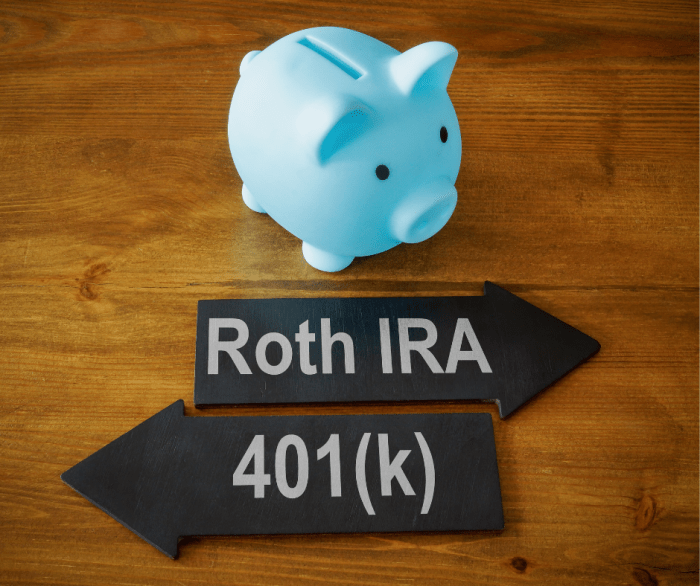
Deciding whether to convert your 401(k) to a Roth IRA is a significant financial decision. Several factors should be carefully considered, particularly when you are changing employment. This section will explore the personal circumstances, questions to ask yourself, and long-term implications to help you make an informed decision.
Your current and projected tax brackets are critical factors in the conversion decision. If you are currently in a lower tax bracket and expect to be in a higher tax bracket in retirement, converting to a Roth IRA may be beneficial. You will pay taxes on the converted amount now, but your future withdrawals will be tax-free. However, if you are currently in a high tax bracket, converting to a Roth IRA might not be as advantageous, as you would pay taxes on the conversion at a higher rate.
Assess your income and tax bracket now and your projected income and tax bracket in retirement. Your retirement timeline is another crucial factor. If you are far from retirement, you have more time for your Roth IRA investments to grow tax-free. The longer your investment horizon, the more time your investments have to compound, potentially leading to significant tax savings over time.
However, if you are nearing retirement, the benefits of tax-free growth may be limited. Consider your financial goals, such as saving for retirement, paying off debt, or purchasing a home. Determine how the conversion to a Roth IRA aligns with your overall financial plan. Consider how the tax savings from a Roth IRA might help you achieve your goals.
Here are some important questions to ask yourself when making this decision:
- What is my current income, and what tax bracket am I in?
- What is my projected income in retirement, and what tax bracket do I expect to be in?
- How long until I plan to retire?
- What are my overall financial goals?
- Do I have enough cash on hand to pay the taxes due on the conversion?
- What is my risk tolerance, and how comfortable am I with investment risk?
- What is the investment horizon for my retirement savings?
Assessing the long-term implications of converting your 401(k) to a Roth IRA is essential. Consider the potential tax savings over time. Roth IRAs offer tax-free growth and withdrawals, which can result in significant tax savings in retirement. Analyze the potential impact on your estate planning. Assets in a Roth IRA are generally not subject to required minimum distributions (RMDs) during your lifetime, which can be advantageous for estate planning purposes.
Evaluate the impact on your overall financial plan. Determine how the conversion aligns with your financial goals, such as retirement savings, debt repayment, and other financial objectives. Consult with a financial advisor or tax professional to get personalized advice. A professional can help you analyze your specific circumstances and determine if converting your 401(k) to a Roth IRA is the right decision for you.
What are the potential penalties and fees associated with rolling over or converting a 401(k) to a Roth IRA, and how can they be avoided?
While rolling over or converting your 401(k) to a Roth IRA can be a beneficial move, it’s essential to be aware of the potential penalties and fees involved. This section will detail the different types of fees and penalties and offer strategies to minimize or avoid them.
Several types of fees might be charged by financial institutions during the rollover or conversion process. Account maintenance fees are charged annually to maintain your account. Transaction fees are charged for certain transactions, such as buying or selling investments. There might be fees for transferring funds or closing your account. Understanding these fees and choosing low-cost providers can help you minimize the impact on your retirement savings.
For example, some financial institutions may waive account maintenance fees if you maintain a certain balance. Consider the fees when choosing a financial institution. Some institutions charge lower fees than others. Shop around and compare the fee structures of different providers. Some financial institutions may charge a fee if you do not meet their minimum investment requirements.
Be aware of these requirements and ensure you meet them. Make sure you understand all the fees associated with your account and the rollover process.
There are potential penalties associated with rolling over or converting a 401(k) to a Roth IRA. The most common penalty is an early withdrawal penalty, which applies if you withdraw funds from your Roth IRA before age 59 1/2. However, there are some exceptions to this penalty, such as for qualified first-time homebuyers or for certain medical expenses. If you do not follow the rules for rollovers and conversions, you may incur tax penalties.
For example, if you receive a distribution from your 401(k) and fail to roll it over into a Roth IRA within 60 days, the distribution will be considered a taxable distribution and may be subject to a 10% early withdrawal penalty. Ensure that you meet all the requirements for rollovers and conversions to avoid these penalties. For example, direct rollovers from your 401(k) to your Roth IRA are the safest way to avoid penalties.
Make sure you understand the rules for rollovers and conversions and follow them carefully.
Here are some strategies to minimize or avoid fees and penalties:
- Choose low-cost providers: Compare fees and choose financial institutions with low or no fees.
- Understand the rules for rollovers and conversions: Follow the correct procedures to avoid penalties.
- Opt for a direct rollover: Transfer funds directly from your 401(k) to your Roth IRA to avoid potential tax implications.
- Avoid early withdrawals: Do not withdraw funds from your Roth IRA before age 59 1/2 unless you meet certain exceptions.
- Consult with a financial advisor: Seek professional advice to ensure you understand the rules and minimize potential fees and penalties.
How can an individual choose the right financial institution to manage their Roth IRA after a 401(k) rollover?
Choosing the right financial institution to manage your Roth IRA is a crucial decision that can significantly impact your investment returns and overall financial well-being. This section will provide criteria for evaluating financial institutions and help you make an informed choice.
When selecting a financial institution, several factors should be carefully evaluated. Investment options are one of the most important considerations. Assess the range of investment options available, including stocks, bonds, mutual funds, and exchange-traded funds (ETFs). Make sure the institution offers a variety of investment choices that align with your investment goals and risk tolerance. Consider the fees associated with the account.
Compare the fee structures of different institutions, including account maintenance fees, transaction fees, and expense ratios. Look for institutions with low fees to maximize your investment returns. Evaluate the quality of customer service provided. Read reviews and check the institution’s customer service ratings. Ensure that the institution provides reliable customer support and easy access to information.
Assess the security measures in place to protect your account. Check for security features like encryption, two-factor authentication, and insurance coverage. Make sure the institution has a strong reputation for protecting customer assets. Consider the educational resources and tools provided by the institution. Look for institutions that offer educational materials, such as webinars, articles, and investment calculators.
These resources can help you make informed investment decisions.
| Type of Institution | Investment Options | Fees | Customer Service | Pros |
|---|---|---|---|---|
| Brokerage Firms | Wide range of stocks, bonds, mutual funds, and ETFs | Vary; can be low with online brokers | Varies; often includes online and phone support | Extensive investment choices; potential for self-directed investing |
| Banks | Limited; primarily mutual funds and CDs | Generally higher than online brokers | Good accessibility; local branches | Convenience; potentially lower fees for banking services |
| Robo-Advisors | Primarily ETFs; based on a risk-tolerance questionnaire | Low; often a percentage of assets under management | Primarily online; automated advice | Automated investing; low-cost |
Investment options are a critical factor when choosing a financial institution. Consider the types of investments available, such as stocks, bonds, mutual funds, and ETFs. The institution should offer a variety of investment choices that align with your investment goals and risk tolerance. The expense ratio is the annual fee charged by a mutual fund or ETF. Compare the expense ratios of different funds and choose funds with lower expense ratios to maximize your investment returns.
Consider the performance history of the investment options. Review the historical performance of the funds and investments offered by the institution. Look for funds with a strong track record of consistent returns. Evaluate the diversification of the investment options. Ensure that the institution offers a diversified range of investment options to reduce risk.
This can be achieved by investing in a mix of stocks, bonds, and other asset classes. Look for investments that match your risk tolerance and investment goals. Consider your investment horizon, which is the amount of time you plan to invest your money. Choose investments that align with your long-term financial goals.
What are the investment strategies to consider within a Roth IRA after rolling over funds from a 401(k)?
Developing a sound investment strategy is crucial for maximizing the benefits of your Roth IRA after rolling over funds from your 401(k). This section will discuss asset allocation, diversification, risk tolerance, and investment options to help you build a successful investment strategy.
Asset allocation is the process of dividing your investments among different asset classes, such as stocks, bonds, and cash. The appropriate asset allocation depends on your risk tolerance, investment goals, and time horizon. A diversified portfolio includes a mix of different investments across various asset classes. Diversification helps to reduce risk by spreading your investments across different sectors and geographies.
Risk tolerance is your ability to withstand fluctuations in the value of your investments. Determine your risk tolerance before selecting investments. If you are risk-averse, you may want to invest in a more conservative portfolio with a higher allocation to bonds. If you are comfortable with risk, you may choose a more aggressive portfolio with a higher allocation to stocks.
Consider your investment goals, such as saving for retirement, purchasing a home, or funding education. Your investment strategy should align with your financial goals. Your investment horizon is the amount of time you plan to invest your money. The longer your time horizon, the more risk you can typically afford to take. A younger investor with a long time horizon may be able to invest more aggressively in stocks, while an older investor nearing retirement may prefer a more conservative approach with a higher allocation to bonds.
Here are some common investment options suitable for a Roth IRA:
- Stocks: Represent ownership in a company and can offer high growth potential.
- Bonds: Represent loans to governments or corporations and provide income and stability.
- Mutual Funds: Pools of money from multiple investors, managed by a professional fund manager.
- Exchange-Traded Funds (ETFs): Similar to mutual funds but trade on stock exchanges.
Let’s consider a hypothetical portfolio to illustrate different investment strategies. A younger investor with a long time horizon might allocate their portfolio as follows: 70% stocks, 20% bonds, and 10% cash. This aggressive strategy aims for high growth potential. An older investor nearing retirement might choose a more conservative allocation: 40% stocks, 50% bonds, and 10% cash. This strategy prioritizes income and stability.
The potential returns and risks of different investment strategies vary. A portfolio heavily weighted in stocks may offer higher potential returns but also carries more risk. A portfolio with a higher allocation to bonds will typically offer lower returns but less risk. Regular review and adjustment of your portfolio are essential. Review your portfolio at least annually, or more frequently if market conditions change.
Rebalance your portfolio periodically to maintain your desired asset allocation. Consider seeking professional advice from a financial advisor to help you develop and manage your investment strategy. A financial advisor can assess your financial situation, risk tolerance, and goals and recommend a personalized investment strategy.
Wrap-Up

In conclusion, converting your 401(k) to a Roth IRA is a significant step, but with careful planning and understanding, it can be a strategic move for your retirement. By considering your personal circumstances, evaluating tax implications, and choosing the right financial institution, you can position yourself for long-term financial success. Remember to assess your risk tolerance, diversify your investments, and stay informed.
Take control of your retirement funds and make the most of this opportunity.
FAQ Guide
What is the main advantage of converting a 401(k) to a Roth IRA?
The primary advantage is tax-free withdrawals in retirement. While you pay taxes on the converted amount upfront, your future withdrawals, including any investment growth, are tax-free.
Are there income limits for converting a 401(k) to a Roth IRA?
No, there are no income limitations for converting a traditional 401(k) to a Roth IRA.
Can I roll over my 401(k) to a Roth IRA if I’m not changing jobs?
Yes, but it depends on your 401(k) plan rules. Some plans allow in-service rollovers. Check with your plan administrator.
What happens if I withdraw money from my Roth IRA before retirement?
You can withdraw your contributions at any time without penalty. However, withdrawing earnings before age 59 1/2 may incur a 10% penalty, along with income tax.
How do I find a reputable financial advisor to help with this process?
Look for advisors with experience in retirement planning, check their credentials (like CFP), and review their fee structure. Get referrals from trusted sources.
