Navigating the complexities of estate planning can feel daunting, but understanding how to avoid probate in California can save your loved ones time, money, and a lot of headaches. Probate, the court-supervised process of settling an estate, can be a lengthy and costly ordeal. This guide, Avoiding the Nightmare: How to Skip Probate Court in California, delves into various strategies to bypass this process and ensure your assets are distributed according to your wishes efficiently.
We’ll explore several powerful tools, from revocable living trusts to Transfer on Death deeds, offering practical advice and real-world examples. Whether you’re a seasoned investor or just starting to plan for the future, this guide provides the essential knowledge to make informed decisions and protect your legacy.
Avoiding the Nightmare: How to Skip Probate Court in California

Navigating the world of estate planning can feel overwhelming, but one of the most common goals is to make the process as smooth and efficient as possible for your loved ones. In California, the probate process, which involves court supervision of asset distribution after death, can be time-consuming, costly, and public. Fortunately, there are several strategies you can employ to avoid probate and ensure your assets are distributed according to your wishes.
This article will delve into the various methods available, providing you with the knowledge to make informed decisions about your estate plan.
Understanding the Significance of Probate Avoidance in California Estate Planning is Crucial for Efficient Asset Distribution

For Californians, avoiding probate is often a primary objective in estate planning. Probate can be a lengthy and complex process, potentially tying up assets for months or even years. This delay can create significant stress and financial hardship for beneficiaries who may need access to those assets to cover living expenses, debts, or other obligations. Furthermore, the probate process involves court fees, attorney fees, and other administrative costs, which can significantly reduce the value of the estate that is ultimately passed on to heirs.
These costs are often calculated as a percentage of the estate’s value, meaning the larger the estate, the higher the fees.
There are several fundamental reasons why individuals actively seek to bypass the probate process. Firstly, time savings are a major draw. Probate can take a year or more to complete, during which time assets are essentially frozen. This delay can be particularly problematic if beneficiaries need immediate access to funds. Secondly, cost reduction is a significant advantage.
As mentioned, probate involves substantial fees, which can be avoided by using alternative estate planning tools. Thirdly, privacy is a key consideration. Probate records are public, meaning anyone can access information about the assets and beneficiaries of an estate. Avoiding probate keeps your family’s financial affairs private. Lastly, simplified asset distribution is a benefit.
Without probate, assets can be distributed directly to beneficiaries, according to your pre-determined plan, without court intervention.
Avoiding probate also allows for more control over the distribution of assets. In probate, the court ultimately decides how assets are distributed, which may not align with the deceased’s wishes. By using tools like trusts, you can specify exactly how and when assets are distributed, ensuring your intentions are followed.
Comparison of Probate with Alternative Estate Planning Strategies

Here’s a comparison of the probate process with alternative estate planning strategies, highlighting the advantages and disadvantages of each method:
| Method | Description | Advantages | Disadvantages |
|---|---|---|---|
| Probate | Court-supervised process of distributing assets after death. | Provides legal oversight, ensures debts are paid, and resolves disputes. | Time-consuming, expensive, public, and inflexible. |
| Revocable Living Trust | A trust created during your lifetime that you can change or revoke. Assets are transferred into the trust. | Avoids probate, provides privacy, allows for flexible asset management, and can manage assets if you become incapacitated. | Requires upfront setup and ongoing maintenance; can be more complex than other methods. |
| Joint Tenancy with Right of Survivorship | Property owned jointly with another person, with the right of the surviving owner to inherit the deceased owner’s share. | Simple to set up, avoids probate for the specific asset. | Limited to specific assets, loss of control, potential for disputes, and can create unintended tax consequences. |
| Transfer on Death (TOD) Deed | Allows you to designate a beneficiary to receive real property after your death, avoiding probate. | Avoids probate for real property, relatively simple to set up. | Only applies to real property, and may have limitations depending on state laws and local regulations. |
Common Misconceptions Surrounding Probate

There are several common misconceptions surrounding probate that can lead to unnecessary anxiety and confusion. Addressing these misconceptions can help individuals make informed decisions about their estate planning:
- Probate is always a disaster: While probate can be challenging, it’s not always a complete disaster. In some cases, especially for smaller estates, the process can be relatively straightforward.
- Probate is the only way to transfer assets: As we’ve discussed, there are many alternative estate planning tools that can help avoid probate.
- Probate is the same everywhere: Probate laws vary by state. What’s true in one state may not be true in another. California’s probate process has its own unique characteristics.
Exploring the Role of Revocable Living Trusts in Streamlining California Estate Administration is a Popular Method
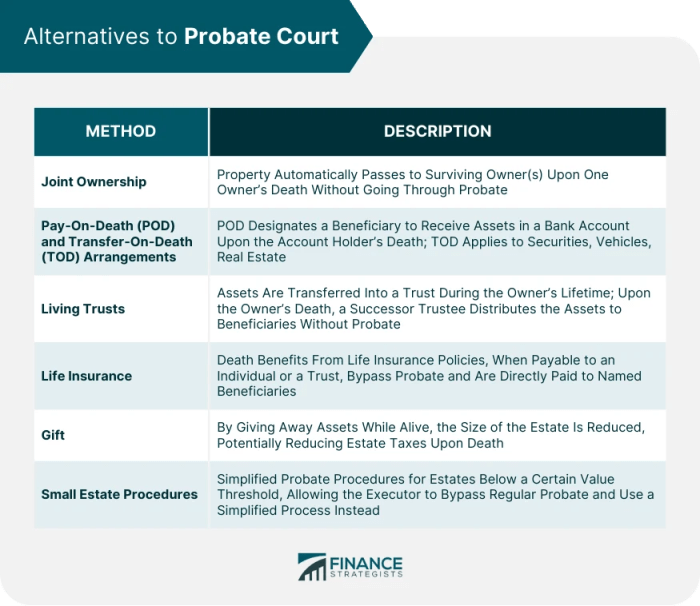
A revocable living trust is a powerful tool for probate avoidance in California. It’s a legal document that allows you to transfer ownership of your assets to the trust during your lifetime, while still maintaining control over those assets. The trust then specifies how those assets should be managed and distributed after your death. The key benefit is that assets held in the trust do not have to go through the probate process.
Here’s a step-by-step guide on how a revocable living trust works:
- Create the Trust Document: You work with an attorney or use an online service to create a formal trust document. This document names you as the “grantor” (the person creating the trust) and the “trustee” (the person managing the trust). You can also name a successor trustee who will take over management of the trust if you become incapacitated or pass away.
- Fund the Trust: This is a critical step. You must transfer ownership of your assets into the trust. This can include bank accounts, investment accounts, real estate, and other valuable property. For example, you would change the title of your house from your name to “The John Smith Revocable Living Trust.”
- Manage the Assets: During your lifetime, you, as the trustee, continue to manage the assets within the trust. You can buy, sell, invest, and use the assets as you see fit. You retain complete control.
- Distribution After Death: Upon your death, the successor trustee steps in to manage the trust. They follow the instructions you provided in the trust document, distributing assets to the beneficiaries you named. This distribution happens without court involvement, avoiding probate.
A revocable living trust provides significant advantages over other probate avoidance techniques.
- Control During Your Lifetime: You maintain complete control over your assets while you’re alive. You can buy, sell, and manage the assets within the trust as you see fit.
- Flexibility: You can modify or revoke the trust at any time during your lifetime, provided you are mentally competent.
- Privacy: The trust document is not a matter of public record, unlike a will that must be filed with the probate court.
- Protection in Case of Incapacity: The trust can specify how your assets should be managed if you become incapacitated, ensuring your financial affairs are handled according to your wishes.
- Avoidance of Probate: The primary advantage is avoiding the probate process, saving time, money, and stress for your loved ones.
Here’s a hypothetical scenario:
John Doe sets up a revocable living trust. He names himself as the trustee and his daughter, Sarah, as the successor trustee. He transfers his house, bank accounts, and investment accounts into the trust. The trust document states that upon John’s death, all assets should be distributed to Sarah.
John Doe’s Will (Hypothetical – for illustrative purposes only):
I, John Doe, direct that all my assets held within the John Doe Revocable Living Trust be distributed to my daughter, Sarah Doe.
Trustee’s Actions (After John’s Death):
Sarah, as the successor trustee, obtains John’s death certificate. She contacts the financial institutions and the title company to transfer ownership of the assets. The house is transferred to Sarah without going through probate. Sarah follows the instructions in the trust document, distributing the assets as John intended.
Final Thoughts
In conclusion, taking the time to understand and implement probate avoidance strategies is a crucial step in responsible estate planning. From revocable trusts to joint tenancy and beneficiary designations, the options are varied and powerful. By choosing the right tools and seeking professional guidance when needed, you can safeguard your assets, streamline the transfer process, and provide peace of mind for yourself and your family, ensuring your legacy is handled exactly as you intend.
Avoiding the Nightmare: How to Skip Probate Court in California offers a roadmap to a smoother, more efficient estate plan.
Clarifying Questions
What is probate?
Probate is the legal process where a will is validated, an estate’s assets are identified, debts and taxes are paid, and assets are distributed to beneficiaries. It’s overseen by the court.
How long does probate take in California?
Probate in California typically takes between 9 months to two years, or even longer, depending on the complexity of the estate.
Is probate expensive?
Yes, probate can be expensive. Fees for attorneys and executors are based on a percentage of the estate’s value, which can significantly reduce the amount inherited by beneficiaries.
Can I avoid probate entirely?
While you can’t always avoid probate completely, you can significantly reduce the assets subject to probate through various estate planning strategies like trusts and beneficiary designations.
Do I need a lawyer to set up a trust?
While not legally required, it’s highly recommended to consult with an estate planning attorney when setting up a trust. They can ensure the trust is properly drafted and meets your specific needs.
