Securing the Legacy: A Guide to Succession Planning for Family Businesses delves into the critical process of ensuring the long-term success of family-owned enterprises. This guide explores the essential steps involved in succession planning, from identifying key stakeholders and assessing the business’s current state to developing a comprehensive plan and managing expectations. It’s about more than just passing the torch; it’s about preserving the values, traditions, and unique identity that define a family business.
The journey through succession planning is complex, encompassing legal, financial, and emotional considerations. This guide provides a roadmap for navigating these challenges, emphasizing effective communication, clear timelines, and actionable steps. We’ll explore the common pitfalls that can derail a succession plan and the strategies for building a robust framework that supports a smooth transition. The goal is to equip family businesses with the knowledge and tools they need to secure their legacy for generations to come.
Understanding the Significance of Succession Planning in Preserving Family Business Values and Traditions

Succession planning isn’t just about handing over the reins; it’s about safeguarding the heart and soul of a family business. It’s about ensuring the values, traditions, and unique identity that have shaped the company for generations continue to thrive. This crucial process helps navigate the complexities of leadership transition while preserving the legacy that has been built over time.
Ensuring Continuity of Values and Traditions
Succession planning plays a vital role in maintaining the core values and traditions that define a family business. It’s more than just a business transaction; it’s a commitment to preserving the company’s unique culture and identity. By carefully planning the transition of leadership, family businesses can ensure that their core principles, such as integrity, customer service, and community involvement, are carried forward.
This proactive approach helps to mitigate the risk of losing the very essence of what makes the business special. It helps to ensure that the next generation understands and embraces the values that have driven the company’s success.Neglecting succession planning can lead to several pitfalls that can significantly impact a family business. Here are some common challenges and their potential consequences:
- Loss of Institutional Knowledge: Without a plan, key employees and family members with valuable experience may leave, taking their knowledge with them. This can lead to decreased efficiency, reduced innovation, and a decline in customer satisfaction.
- Erosion of Family Harmony: Disagreements about who should take over and how the transition should occur can create conflict within the family, damaging relationships and potentially leading to legal battles.
- Decline in Financial Performance: A poorly executed transition can result in a loss of focus, decreased productivity, and ultimately, a decline in profitability. The new leader may lack the necessary skills or experience to effectively manage the business.
- Damage to Reputation: A sudden or poorly planned transition can damage the company’s reputation with customers, suppliers, and employees. This can lead to a loss of trust and a decline in market share.
- Missed Opportunities: Without a clear succession plan, the business may miss opportunities for growth and innovation. The new leader may be hesitant to take risks or may lack the vision to guide the company into the future.
A well-defined succession plan can strengthen family bonds by creating a shared vision and fostering a sense of purpose. It provides a framework for open communication, mutual respect, and shared goals. Here’s an example of how a succession plan can positively impact different family members:
| Family Member | Positive Impact | Specific Benefits | Long-Term Outcome |
|---|---|---|---|
| The Current Leader (e.g., the CEO/Founder) | Peace of Mind and Security | Knowing the business is in capable hands, financial security for retirement, legacy preserved. | Reduced stress, improved quality of life, continued family involvement in the business. |
| Potential Successor (e.g., the Next Generation Leader) | Preparedness and Confidence | Clear roadmap for development, mentorship, gradual assumption of responsibilities, sense of ownership. | Increased leadership skills, stronger business acumen, enhanced sense of purpose and commitment. |
| Other Family Members (e.g., Shareholders, Siblings) | Clarity and Transparency | Understanding of the succession process, clear roles and responsibilities, fair treatment. | Reduced conflict, improved family relationships, shared pride in the family business. |
| The Business Itself | Stability and Continuity | Smooth transition of leadership, preservation of core values, continued financial success. | Enhanced reputation, sustained customer loyalty, long-term viability and growth. |
Identifying Key Stakeholders and Their Roles in the Succession Planning Process
Identifying the key stakeholders and defining their roles is a crucial step in the succession planning process. It ensures that everyone involved understands their responsibilities and how they contribute to the overall success of the transition. This clarity promotes effective communication, minimizes conflicts, and helps maintain a smooth and transparent process.
Stakeholder Roles and Responsibilities
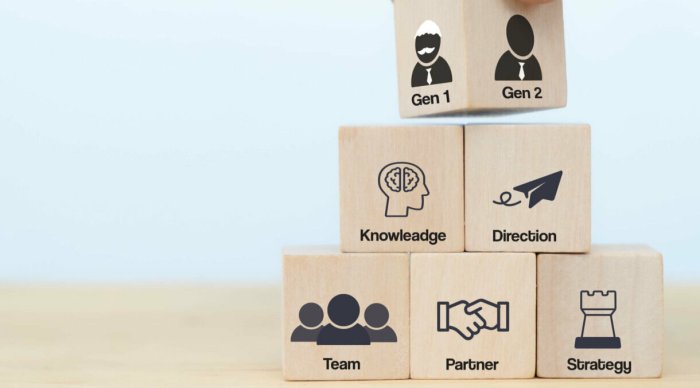
Here are some examples of different stakeholder roles within a family business and their respective responsibilities:
- The Current Leader: The current leader is responsible for initiating the succession planning process, identifying potential successors, providing mentorship, and ultimately, making the final decision on who will take over. They also play a critical role in communicating the plan to all stakeholders and ensuring a smooth transition.
- Potential Successors: Potential successors must demonstrate a commitment to the family business and its values. They are responsible for developing their skills, gaining experience, and preparing themselves for leadership. This may involve taking on new responsibilities, participating in leadership training, and working closely with the current leader.
- Other Family Members: Other family members, such as shareholders, siblings, and spouses, play a crucial role in supporting the succession plan. They need to understand the plan, communicate openly, and respect the decisions made by the current leader and the potential successor.
- External Advisors: External advisors, such as lawyers, accountants, and business consultants, provide valuable expertise and guidance throughout the succession planning process. They can help with legal and financial planning, assess the capabilities of potential successors, and facilitate communication among stakeholders.
Clear communication is paramount throughout the succession planning process. Regular meetings, open dialogue, and transparent information sharing are essential for managing expectations and resolving potential conflicts. This helps ensure that everyone feels informed, respected, and valued.Conflicts among stakeholders can arise during the succession process due to various factors, such as differing expectations, disagreements over leadership selection, or concerns about fairness.
Here’s a scenario illustrating how these conflicts can be managed:
| Conflict Scenario | Stakeholders Involved | Potential Solutions | Expected Outcome |
|---|---|---|---|
| Disagreement over Leadership Selection: Two siblings both believe they are best suited to succeed the current leader. | Current Leader, Siblings, External Advisor (Facilitator) |
|
Fair and transparent decision-making process, reduced sibling rivalry, acceptance of the chosen successor. |
| Concerns about Fairness: Some family members feel the succession plan favors one individual over others. | Current Leader, All Family Members, External Advisor (Legal/Financial) |
|
Increased trust, reduced resentment, strengthened family relationships, and legally sound plan. |
| Differing Expectations: Family members have different expectations about the future of the business and the role of the successor. | Current Leader, Potential Successor, Family Members, External Advisor (Strategic Planner) |
|
Aligned goals, improved communication, increased commitment to the shared vision. |
Assessing the Current State of the Family Business and the Capabilities of Potential Successors
A thorough assessment of the current state of the family business is essential before initiating the succession planning process. This evaluation provides a clear understanding of the company’s strengths, weaknesses, opportunities, and threats. It also helps identify the key areas that need to be addressed during the transition and ensures that the new leader is well-prepared to take on the challenges and opportunities ahead.
Evaluating the Business and Potential Successors
Here are the crucial steps involved in assessing the current state of the family business:
- Financial Performance Analysis: Review financial statements (income statement, balance sheet, cash flow statement) to assess profitability, liquidity, and solvency. Analyze key financial ratios (e.g., gross profit margin, debt-to-equity ratio) to identify trends and areas of concern. For example, if a company’s profit margins have been declining over the past few years, this could indicate problems with pricing, cost control, or competition.
- Market Position Assessment: Evaluate the company’s market share, customer base, and competitive landscape. Analyze industry trends, customer preferences, and the strengths and weaknesses of competitors. For instance, a business might conduct market research to understand customer satisfaction, identify emerging market opportunities, or assess the threat of new entrants.
- Organizational Structure Review: Examine the company’s organizational chart, reporting relationships, and decision-making processes. Assess the efficiency and effectiveness of internal operations, including human resources, sales and marketing, and production or service delivery. An example would be to identify any bottlenecks in the workflow or evaluate the skills and experience of key employees.
- Operational Efficiency Analysis: Evaluate the company’s operational efficiency, including its processes, technology, and resource utilization. Identify areas for improvement, such as streamlining processes, implementing new technologies, or reducing waste. For instance, a company could analyze its supply chain to identify opportunities to reduce costs and improve delivery times.
Evaluating the capabilities, skills, and readiness of potential successors is equally important. This involves assessing both technical and leadership qualities. Here are some methods for evaluating potential successors:
- Skills Assessments: Use assessments (e.g., personality tests, skills-based tests) to evaluate technical skills (e.g., financial analysis, marketing) and soft skills (e.g., communication, problem-solving).
- Performance Reviews: Review past performance reviews and evaluate their achievements, areas for improvement, and overall contribution to the business.
- 360-Degree Feedback: Gather feedback from peers, subordinates, and superiors to assess their leadership style, communication skills, and ability to work with others.
- Mentorship and Coaching: Provide mentorship and coaching to help potential successors develop their skills and prepare for leadership roles.
- Leadership Development Programs: Enroll potential successors in leadership development programs to enhance their leadership skills and prepare them for the challenges of leading the business.
A SWOT analysis is a valuable tool for assessing the current state of the family business and how it can inform succession planning decisions.
| SWOT Component | Description | Examples | Impact on Succession Planning |
|---|---|---|---|
| Strengths | Internal attributes that give the business an advantage. | Strong brand reputation, loyal customer base, skilled workforce, innovative products. | Identify areas where the successor can build on existing strengths. Ensure these strengths are preserved during the transition. |
| Weaknesses | Internal attributes that put the business at a disadvantage. | Outdated technology, high operating costs, limited market reach, lack of succession plan. | Identify areas where the successor needs to focus on improvement. Address weaknesses through training, investment, or restructuring. |
| Opportunities | External factors that could benefit the business. | New market trends, emerging technologies, changing customer preferences, favorable government policies. | Identify opportunities for growth and innovation that the successor can pursue. Align the succession plan with strategic goals. |
| Threats | External factors that could harm the business. | Increased competition, economic downturn, changing regulations, disruptive technologies. | Identify potential risks that the successor needs to be prepared to address. Develop contingency plans to mitigate threats. |
Developing a Comprehensive Succession Plan with Realistic Timelines and Actionable Steps
Developing a comprehensive succession plan is a strategic process that requires careful consideration of various factors, including the company’s goals, the capabilities of potential successors, and the legal and financial aspects of the transition. This plan serves as a roadmap for a smooth and successful leadership transition, ensuring the continuity of the family business and its legacy.
Succession Plan Structures and Transition
Here’s the process of developing a comprehensive succession plan:
- Define Goals and Objectives: Clearly articulate the goals of the succession plan. What do you hope to achieve with the transition? (e.g., maintain family ownership, preserve company culture, ensure financial stability).
- Identify and Assess Potential Successors: Evaluate the skills, experience, and leadership potential of potential successors. This may involve using assessment tools, performance reviews, and 360-degree feedback.
- Establish Timelines: Set realistic timelines for the transition process, including key milestones and deadlines.
- Define Actionable Steps: Artikel specific steps that need to be taken to implement the succession plan. This includes training programs, mentorship opportunities, and the transfer of responsibilities.
- Develop a Communication Plan: Create a plan to communicate the succession plan to all stakeholders. Transparency and open communication are essential for managing expectations and building trust.
- Address Legal and Financial Considerations: Consult with legal and financial advisors to address estate planning, tax implications, and ownership transfer mechanisms.
- Review and Update the Plan Regularly: The succession plan should be reviewed and updated regularly to ensure it remains relevant and effective.
There are different succession plan structures that family businesses can adopt, each with its own advantages and disadvantages:
- Phased Transition: A gradual transfer of responsibilities over time. This allows the successor to gain experience and build relationships before taking full control. Pros: Reduces risk, allows for knowledge transfer, and provides time for the successor to adapt. Cons: Can be a lengthy process and may require significant coordination.
- Sudden Transition: An immediate transfer of leadership, often due to unforeseen circumstances. Pros: Can be necessary in emergency situations. Cons: Can be disruptive and may lead to a loss of institutional knowledge.
- Blended Approach: A combination of phased and sudden transition elements. This may involve a period of gradual transition followed by a more rapid transfer of responsibilities. Pros: Offers flexibility and can be tailored to the specific needs of the business. Cons: Requires careful planning and coordination.
A phased transition plan is a popular approach, allowing for a smoother transfer of leadership and minimizing disruption. Here’s a visual timeline illustrating a phased transition plan:
| Phase | Milestones | Responsibilities | Evaluation Points |
|---|---|---|---|
| Phase 1: Preparation (1-2 years) |
|
|
|
| Phase 2: Gradual Transfer (2-3 years) |
|
|
|
| Phase 3: Full Transition (6-12 months) |
|
|
|
Legal and Financial Considerations in Structuring the Succession Plan for Smooth Transitions
Structuring a succession plan involves a complex interplay of legal and financial considerations that must be addressed to ensure a smooth transition. These aspects are critical for protecting the interests of all stakeholders, minimizing tax liabilities, and facilitating the orderly transfer of ownership. Neglecting these considerations can lead to disputes, financial losses, and even the failure of the succession plan.
Legal and Financial Aspects of Succession
Here are some of the legal and financial aspects that must be considered:
- Estate Planning: Estate planning is a critical component of succession planning. It involves determining how assets will be distributed upon the death of the current leader. This includes creating a will, establishing trusts, and designating beneficiaries.
- Tax Implications: Succession planning can have significant tax implications, including estate taxes, gift taxes, and income taxes. It’s essential to consult with tax advisors to minimize tax liabilities and ensure compliance with tax laws.
- Ownership Transfer Mechanisms: The ownership of the family business must be transferred to the successor(s). This can be achieved through various mechanisms, such as gifting shares, selling shares, or establishing a buy-sell agreement.
- Business Valuation: A professional valuation of the business is often necessary to determine the fair market value of the company’s assets and ownership interests. This valuation is crucial for estate planning, ownership transfers, and tax purposes.
- Legal Documents: Several legal documents are typically involved in succession planning. These documents are designed to ensure that the succession plan is legally sound and enforceable.
- Financial Instruments: Various financial instruments can be used to facilitate the succession plan, such as life insurance, buy-sell agreements, and trusts.
Here are some key legal documents and financial instruments involved in succession planning:
- Will: A legal document that specifies how a person’s assets should be distributed after their death.
- Trust: A legal arrangement where assets are held by a trustee for the benefit of beneficiaries.
- Buy-Sell Agreement: An agreement that Artikels how ownership interests in the business will be transferred upon certain events, such as death, disability, or retirement.
- Shareholder Agreement: An agreement that governs the rights and responsibilities of shareholders in a corporation.
- Life Insurance: Insurance that provides a death benefit to beneficiaries, often used to fund buy-sell agreements or provide liquidity for estate taxes.
Different ownership transfer strategies have varying tax implications and benefits.
| Ownership Transfer Strategy | Description | Tax Implications | Benefits |
|---|---|---|---|
| Gifting Shares | Transferring ownership shares to the successor as a gift. | May be subject to gift tax, depending on the value of the shares and the annual gift tax exclusion. | Simple to implement, can transfer ownership gradually, reduces the estate tax liability. |
| Selling Shares | Selling ownership shares to the successor at a fair market value. | Subject to capital gains tax on the difference between the sale price and the cost basis. | Provides the current leader with cash, can be structured to provide financing for the purchase. |
| Buy-Sell Agreement | An agreement that Artikels the terms of the sale of ownership interests upon certain events. | Tax implications depend on the specific terms of the agreement and the method of funding (e.g., life insurance). | Provides certainty about the future of the business, ensures a fair price for the shares, and can provide liquidity for the estate. |
| Establishing a Trust | Transferring ownership shares to a trust for the benefit of the successor. | Tax implications depend on the type of trust (e.g., revocable vs. irrevocable) and the terms of the trust agreement. | Provides control over the distribution of assets, can protect assets from creditors, and can minimize estate taxes. |
Fostering Effective Communication and Managing Expectations Throughout the Succession Process
Effective communication and expectation management are essential throughout the succession process. Maintaining transparency and building trust are critical for ensuring that all stakeholders are informed, engaged, and supportive of the transition. Open and honest communication helps to minimize misunderstandings, reduce conflict, and ensure a smooth and successful transition.
Communication Challenges and Strategies
Here’s the importance of effective communication and expectation management:
- Transparency: Sharing information openly and honestly about the succession plan, the selection process, and the progress of the transition.
- Regular Updates: Providing regular updates to all stakeholders about the succession process, including key milestones, timelines, and any changes.
- Active Listening: Listening attentively to the concerns and feedback of all stakeholders.
- Empathy: Showing understanding and compassion for the emotions and perspectives of others.
- Managing Expectations: Clearly communicating expectations to all stakeholders.
Communication challenges can arise during succession. Here are some examples and strategies for overcoming them:
- Lack of Transparency: Failure to share information openly and honestly. Strategy: Implement a communication plan that includes regular updates and opportunities for feedback.
- Resistance to Change: Stakeholders may resist the succession plan or the new leader. Strategy: Involve stakeholders in the planning process and address their concerns proactively.
- Conflicting Expectations: Different stakeholders may have different expectations about the succession process or the future of the business. Strategy: Clearly define roles, responsibilities, and expectations.
- Poor Communication Skills: The current leader or the successor may lack effective communication skills. Strategy: Provide communication training to the key individuals.
- Family Dynamics: Family relationships can complicate the succession process. Strategy: Seek professional facilitation to mediate conflicts and facilitate communication.
Here’s a framework outlining a communication plan:
| Stakeholder Group | Frequency | Methods | Content |
|---|---|---|---|
| Family Members | Monthly or Quarterly | Family meetings, written reports, email updates. | Progress of the succession plan, financial performance, strategic goals, and any significant changes. |
| Key Employees | Quarterly or as needed | Town hall meetings, department meetings, email updates, and one-on-one meetings. | Information about the succession plan, the successor’s role, and any changes to their responsibilities. |
| Customers | As needed | Letters, email announcements, and website updates. | Information about the succession plan, the new leader, and the company’s commitment to customer service. |
| Suppliers | As needed | Phone calls, email announcements, and in-person meetings. | Information about the succession plan, the new leader, and the company’s commitment to its suppliers. |
| External Advisors | Regularly (e.g., monthly or quarterly) | Phone calls, meetings, written reports. | Progress of the succession plan, any legal or financial issues, and any changes to the plan. |
Ultimate Conclusion
In conclusion, Securing the Legacy: A Guide to Succession Planning for Family Businesses underscores the importance of proactive planning in safeguarding the future of family enterprises. By addressing key areas such as stakeholder roles, business assessment, plan development, and effective communication, businesses can create a succession strategy that aligns with their unique values and goals. Remember, a well-executed succession plan is an investment in the future, ensuring the continuity of the business and the enduring legacy of the family.
Embracing these strategies will not only ensure business continuity but also strengthen family bonds and shared purpose.
FAQ Corner
What is the ideal timeframe for starting succession planning?
Ideally, succession planning should begin well in advance, often several years before the intended transition. This allows ample time for training, mentorship, and a smooth handover.
What are the key differences between a phased and a sudden transition?
A phased transition involves a gradual handover of responsibilities over time, while a sudden transition occurs due to unforeseen circumstances, such as illness or death. Phased transitions are generally preferred for their smoother process.
How can conflicts among family members be minimized during the succession process?
Open communication, clearly defined roles, and professional mediation can help manage conflicts. Establishing a family council can also provide a structured forum for addressing concerns.
What role do external advisors play in succession planning?
External advisors, such as lawyers, financial planners, and business consultants, provide unbiased expertise and guidance throughout the process, ensuring a well-rounded and legally sound plan.
How often should a succession plan be reviewed and updated?
A succession plan should be reviewed and updated regularly, typically every one to three years, or whenever there are significant changes in the business, family, or legal environment.
