Choosing the right life insurance can feel like navigating a maze. Term life and whole life insurance are the two main paths, each with its own set of features and benefits. Understanding the differences between them is the first step towards securing your family’s financial future. This guide breaks down the complexities, helping you make an informed decision.
We’ll explore the core aspects of both term and whole life insurance, from coverage periods and premium structures to investment components and potential drawbacks. We’ll also examine real-life scenarios and offer insights to help you align your insurance choices with your specific financial goals and family needs.
Term vs. Whole Life: Which Insurance Policy Protects Your Family Best?

Choosing the right life insurance policy is a big decision, one that can significantly impact your family’s financial security. Term life and whole life insurance are the two main types, each with its own set of features, benefits, and drawbacks. Understanding these differences is crucial for making an informed choice that aligns with your specific needs and financial goals. This guide will break down both types of policies, helping you navigate the complexities and select the coverage that best protects your loved ones.
Understanding the Fundamental Differences Between Term and Whole Life Insurance Policies is Crucial for Informed Decision Making
Understanding the core differences between term and whole life insurance is the first step in making a smart choice. These policies differ significantly in their structure, coverage period, and overall purpose. Term life insurance provides temporary coverage, while whole life offers permanent protection and includes a savings component. Let’s delve into the details of each.
Term life insurance is straightforward: it provides coverage for a specific period, or “term,” such as 10, 20, or 30 years. If the insured person dies during this term, the policy pays out a death benefit to the beneficiaries. If the policyholder outlives the term, the coverage ends, and no benefit is paid. The primary appeal of term life is its affordability.
Premiums are typically much lower than those for whole life, making it accessible for individuals and families on a budget. This makes it a popular choice for covering specific financial needs, like a mortgage or the years when children are dependent. For example, a 30-year term policy can be designed to cover the outstanding balance of a mortgage, ensuring that the family home is protected if the policyholder passes away.
Because the coverage is limited to a specific period, the insurance company assumes less risk, which translates to lower premiums. However, it’s essential to recognize that term life provides no cash value and expires at the end of the term, requiring a new policy to maintain coverage.
Whole life insurance, on the other hand, offers permanent coverage for the insured’s entire life, as long as premiums are paid. It’s more than just a death benefit; it also includes a cash value component that grows over time on a tax-deferred basis. This cash value accumulates based on a guaranteed interest rate, and policyholders can borrow against it or even withdraw it (though withdrawals will reduce the death benefit).
Because of the permanent coverage and the savings element, whole life premiums are significantly higher than term life premiums. This makes it a long-term investment tool and a part of estate planning. Whole life policies can be structured to provide a consistent death benefit, allowing for predictable estate planning. The cash value component offers a source of funds that can be used for various purposes, such as supplementing retirement income or covering unexpected expenses.
The permanence of coverage and the potential for cash value growth make whole life a valuable tool for those seeking financial security and legacy planning.
The key distinctions between term and whole life policies are most apparent when comparing their features side-by-side. The following table highlights these differences:
| Feature | Term Life Insurance | Whole Life Insurance | Key Difference |
|---|---|---|---|
| Coverage Duration | Specific term (e.g., 10, 20, 30 years) | Permanent (covers your entire life) | Term life is temporary; whole life is designed to last a lifetime. |
| Premium Structure | Lower premiums, remain level during the term | Higher premiums, remain level for life | Term life is more affordable initially, while whole life requires a larger upfront investment. |
| Cash Value | No cash value component | Builds cash value over time, tax-deferred | Term life provides no savings element; whole life includes a cash value that grows over time. |
| Investment Aspect | None | Potential for cash value growth, policy loans possible | Term life offers no investment opportunities, while whole life can serve as a savings tool. |
Evaluating the Financial Implications of Term Life Insurance Can Help Determine Suitability
The financial implications of term life insurance are a crucial aspect of assessing its suitability. The affordability of term life makes it an attractive option for many, but it’s essential to understand how premiums are calculated and what factors influence them. Additionally, exploring scenarios where term life shines and recognizing its potential drawbacks provides a balanced perspective.
Term life insurance is generally more affordable than whole life, making it a budget-friendly option for families. The premium costs are determined by several factors, including the insured’s age, health, and lifestyle. Younger, healthier individuals typically pay lower premiums than older individuals or those with pre-existing health conditions. Smokers, for instance, often pay significantly higher premiums than non-smokers due to the increased health risks associated with smoking.
The amount of coverage, or the death benefit, also impacts the premium; a higher death benefit means higher premiums. However, even with these factors considered, term life allows for a higher death benefit for a lower initial outlay compared to whole life. This makes it an attractive option for budget-conscious families who need substantial coverage to protect their loved ones.
For example, a 35-year-old in good health might be able to secure a $500,000 term life policy for less than $50 per month, a significantly lower cost than a whole life policy with a similar death benefit.
Term life insurance is particularly advantageous in specific scenarios where financial obligations are time-sensitive. Consider these examples:
- Protecting a Family During Child-Raising Years: A young couple with children can secure a term life policy to cover their income, ensuring the children’s financial well-being if a parent dies.
- Mortgage Protection: A term life policy can be designed to match the term of a mortgage, guaranteeing that the home is paid off if the homeowner passes away.
- Covering Debts: Term life can be used to cover other debts, such as student loans or personal loans, providing financial relief to the surviving family members.
- Business Protection: Business owners can use term life to protect their business partners or ensure the business can continue operations if a key person dies.
These scenarios highlight how term life insurance provides essential financial protection during critical life stages when financial responsibilities are typically at their peak.
While term life offers many advantages, it’s essential to be aware of its potential drawbacks. The most significant is that the coverage expires at the end of the term. If the policyholder outlives the term, the coverage ends, and no benefit is paid. This means that if you still need coverage after the term expires, you’ll need to purchase a new policy, which may come with higher premiums due to increased age and potential health changes.
Term life policies do not build cash value, meaning there’s no savings component. Additionally, if a term life policy is renewable, the premiums will likely increase upon renewal. This is because the insurance company assesses the policyholder’s current age and health status. Finally, there’s always the risk of not outliving the term. This means the policyholder might pay premiums for years without ever receiving a benefit.
While this is the nature of insurance, it’s a consideration to keep in mind when evaluating the long-term benefits of term life.
Exploring the Advantages and Disadvantages of Whole Life Insurance Offers Comprehensive Insight

Whole life insurance offers a different set of advantages and disadvantages compared to term life. Its permanent coverage and cash value component provide long-term financial security, but it also comes with higher premiums and different investment considerations. Examining these aspects in detail is vital for making an informed decision.
The benefits of whole life insurance are centered around its lifelong coverage and the unique features it offers. The primary advantage is the permanent nature of the coverage. As long as premiums are paid, the policy remains in force for the insured’s entire life, providing peace of mind knowing that your loved ones will receive a death benefit regardless of when you pass away.
Another key benefit is the cash value component, which grows over time on a tax-deferred basis. This cash value can be borrowed against for policy loans, offering a source of funds for various needs, such as emergencies or opportunities. Whole life insurance can also be a part of a long-term financial strategy and inheritance planning. It can provide a predictable death benefit for estate planning purposes, ensuring that assets are passed on to heirs efficiently.
Additionally, the cash value can supplement retirement income or be used to cover estate taxes. This makes whole life insurance a valuable tool for those seeking long-term financial security and legacy planning.
While whole life insurance offers many benefits, it’s essential to understand the associated costs. The most significant drawback is the higher premiums compared to term life insurance. These higher premiums reflect the permanent coverage and the cash value component, but they can be a significant financial burden, especially for younger individuals or those on a tight budget. The potential for lower investment returns compared to other investment vehicles is another consideration.
While the cash value grows, the returns are typically modest compared to investments like stocks or mutual funds. The cash value growth is often tied to a guaranteed interest rate, which may not keep pace with inflation or the returns available in other markets. There are also fees associated with the policy, including policy fees and potentially surrender charges if the policy is canceled early.
Surrender charges can significantly reduce the cash value available if the policyholder needs to access the funds before a certain period. Understanding these costs is crucial to evaluating whether whole life insurance aligns with your financial goals and risk tolerance.
The investment component of whole life insurance can be compared with other investment options to illustrate its potential as a savings tool. While whole life offers the benefit of tax-deferred growth and the security of a guaranteed interest rate, it’s essential to compare it to other investment vehicles. Stocks, bonds, and mutual funds typically offer higher potential returns, but they also come with higher risk.
Whole life insurance provides a more conservative approach, with the cash value growing steadily over time. The following blockquotes provide examples of how cash value can grow:
Scenario 1: A 30-year-old purchases a $100,000 whole life policy with an annual premium of $2,000. Assuming a guaranteed interest rate of 4%, the cash value might reach $25,000 after 20 years and $60,000 after 30 years.
Scenario 2: A 45-year-old purchases a $250,000 whole life policy with an annual premium of $5,000. After 15 years, the cash value might be $40,000 and after 25 years, the cash value could grow to $90,000.
These examples demonstrate how the cash value grows over time, providing a source of funds that can be used for various purposes. However, it’s important to note that the actual growth will vary depending on the specific policy, the insurance company, and the guaranteed interest rate.
Considering Personal Circumstances to Select the Right Insurance Policy Is Essential
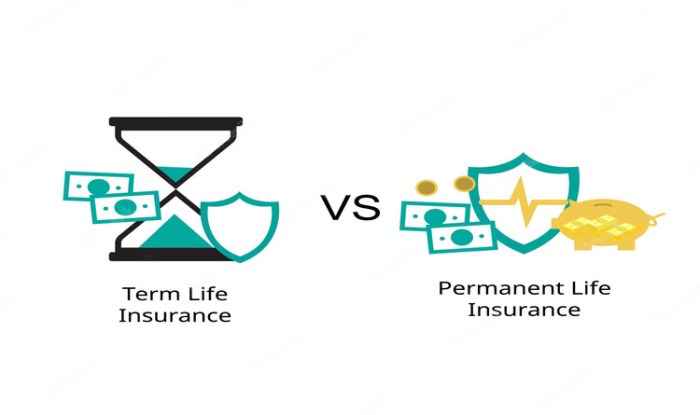
Choosing between term and whole life insurance requires careful consideration of your personal circumstances. Factors such as age, financial goals, dependents, and risk tolerance play a crucial role in determining which policy best suits your needs. Seeking professional financial advice can provide invaluable guidance in this decision-making process.
Several key factors should be considered when choosing between term and whole life insurance. Your age is a significant factor, as younger individuals often find term life more affordable, while older individuals may find the permanent coverage of whole life more appealing. Your financial goals are also essential. If your primary goal is to provide financial protection for a specific period, such as during the mortgage term or until your children are grown, term life might be the better choice.
If your goal is long-term financial security and legacy planning, whole life may be more appropriate. The number of dependents you have and their financial needs also play a role. If you have young children or other dependents, you’ll likely need a higher death benefit, which could influence your choice between term and whole life. Your risk tolerance is another critical factor.
Term life is generally considered less risky because the premiums are lower. Whole life involves a longer-term commitment, and the cash value growth may be less appealing if you prefer higher-risk, higher-reward investments. Consulting a financial advisor is highly recommended to assess your needs and make an informed decision.
To assess your financial needs, it’s crucial to estimate the amount of coverage required. This involves a detailed financial needs analysis. Start by calculating your current income and debts. List all your financial obligations, including mortgage payments, outstanding loans, and other debts. Next, estimate your future expenses.
Consider the cost of raising children, college tuition, and other long-term financial goals. Then, calculate the total amount of coverage needed. This should include enough to cover your debts, future expenses, and provide for your dependents’ financial needs. Finally, factor in other assets you have, such as savings and investments. This will help you determine the specific amount of life insurance needed.
A detailed financial needs analysis will provide a clear picture of your insurance requirements and help you choose the right policy.
Real-life scenarios can help illustrate how different family situations influence the choice between term and whole life insurance:
- Young Family with a Mortgage: A young couple with a mortgage and young children might benefit most from a 20- or 30-year term life policy to cover the mortgage and provide financial security for their children during their formative years.
- Single Parent: A single parent with young children might opt for a term life policy with a high death benefit to ensure the children’s financial well-being if the parent dies.
- Retirees Planning for Estate Preservation: A retired couple planning for estate preservation might choose whole life insurance to provide a guaranteed death benefit for inheritance purposes and cover estate taxes.
- Business Owners: Business owners might use term life to cover key-person insurance needs or whole life to provide long-term financial security for the business and the owner’s family.
These scenarios highlight how the choice between term and whole life depends on individual circumstances and financial goals.
Understanding Riders and Policy Features Can Enhance Insurance Protection

Both term and whole life insurance policies offer various riders and features that can enhance coverage and tailor the policy to meet specific needs. Understanding these options is essential for maximizing the protection provided by your life insurance policy.
Riders are additional features that can be added to a life insurance policy to customize the coverage and provide extra protection. Both term and whole life policies offer various riders. The accidental death benefit rider pays an additional benefit if the insured dies as a result of an accident. The disability income rider provides income if the insured becomes disabled and unable to work.
The child term rider provides term life coverage for the insured’s children, ensuring their financial security. Other common riders include the critical illness rider, which pays a benefit if the insured is diagnosed with a covered critical illness, and the long-term care rider, which helps cover the costs of long-term care services. Choosing the right riders depends on your specific needs and circumstances.
For example, if you have young children, the child term rider might be beneficial. If you’re concerned about disability, the disability income rider could provide peace of mind.
Understanding the terms and conditions of an insurance policy is crucial for ensuring you receive the intended benefits. The definition of death benefit is the amount paid to the beneficiaries upon the insured’s death. The beneficiary designation is the process of naming the individuals or entities who will receive the death benefit. It’s essential to keep the beneficiary designations up to date.
The policy’s exclusions are the situations or causes of death not covered by the policy. Common exclusions include death due to suicide within the first two years of the policy or death resulting from war. The process of filing a claim involves notifying the insurance company of the insured’s death and providing the necessary documentation, such as a death certificate and the policy.
Understanding these terms and conditions is essential for ensuring that your beneficiaries receive the death benefit and that the policy provides the intended protection.
Different insurance companies offer various policy features and benefits. Comparing the offerings of several insurers is essential to find the best policy for your needs. Factors to consider include the financial strength of the insurer, indicated by ratings from agencies like A.M. Best, Standard & Poor’s, and Moody’s. A financially strong insurer is more likely to meet its obligations.
Customer service ratings are another important consideration, as they indicate the insurer’s responsiveness and ease of doing business. Policy features vary among insurers. Some may offer more flexible payment options, while others may offer more extensive rider options. The death benefit options also vary. Some policies offer a level death benefit, while others offer a death benefit that increases over time.
The cash value growth rates for whole life policies also vary among insurers. Some insurers offer higher guaranteed interest rates, while others offer more flexible cash value growth options. Comparing these features and benefits across different insurers allows you to choose the policy that best meets your needs and provides the most comprehensive protection.
- Financial Strength: Look for insurers with high ratings from reputable agencies.
- Customer Service: Consider the insurer’s reputation for responsiveness and ease of doing business.
- Policy Features: Compare payment options, rider availability, and death benefit options.
- Cash Value Growth: For whole life, compare guaranteed interest rates and cash value growth options.
Final Conclusion
In conclusion, the choice between term and whole life insurance hinges on your individual circumstances, financial objectives, and risk tolerance. Term life offers affordability and straightforward protection, while whole life provides permanent coverage and potential investment growth. By carefully considering your needs and seeking professional advice, you can select the policy that best safeguards your family’s future and provides peace of mind.
FAQ Corner
What is the primary difference between term and whole life insurance?
Term life insurance provides coverage for a specific period, while whole life insurance offers lifelong coverage.
Is term life insurance cheaper than whole life?
Generally, yes. Term life insurance premiums are typically lower than whole life premiums for the same death benefit amount.
Does whole life insurance build cash value?
Yes, whole life insurance policies accumulate cash value over time, which can be borrowed against or withdrawn.
What happens if I outlive my term life insurance policy?
If your term expires and you haven’t renewed or converted to another policy, your coverage ends, and no benefits are paid.
Can I change my term life insurance policy to a whole life policy?
Some term life policies offer a conversion option, allowing you to switch to a whole life policy without a new medical exam.
